





By Muhammad Saeed Lawan
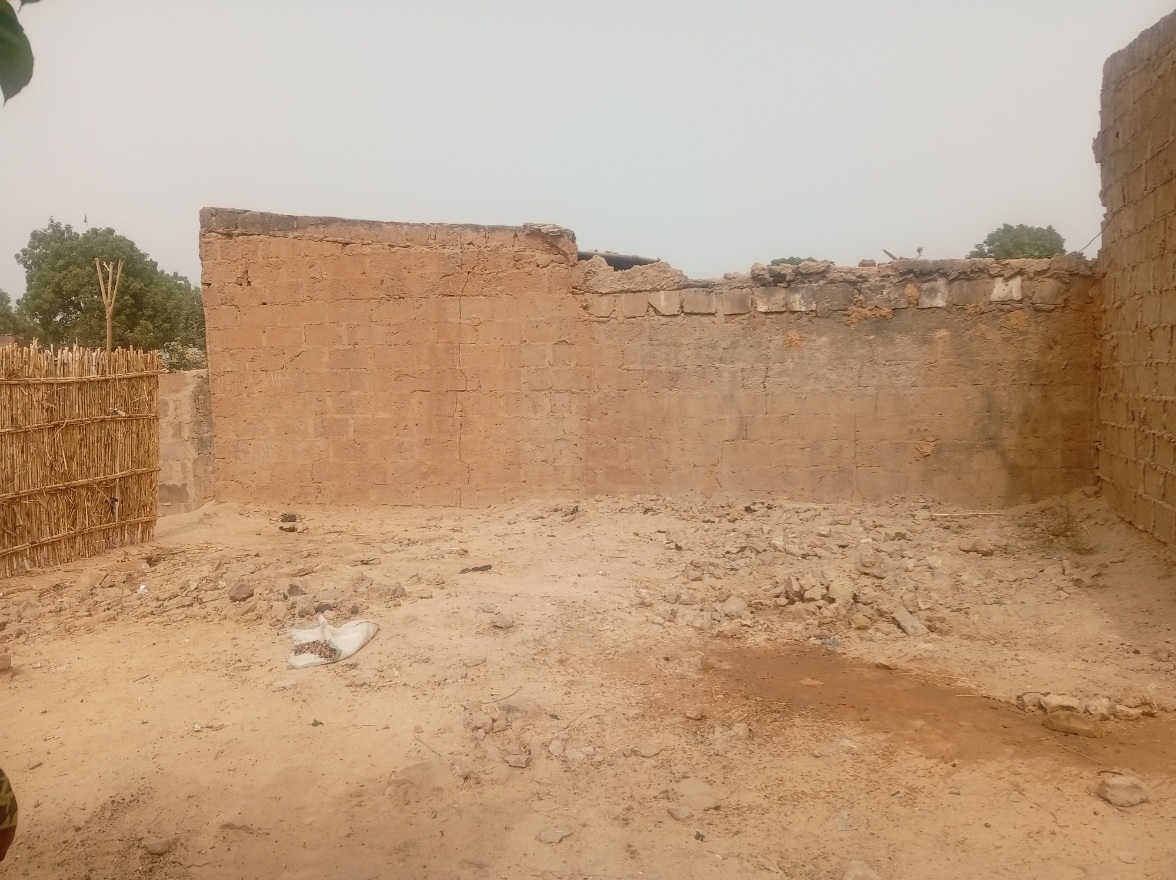
On the evening of August 13, 2025, Mairama Inuwa lived a life of hard-earned stability. A 48-year-old widow and mother of eight, her world was contained within the walls of a two-bedroom brick house near the edge of the Potiskum valley.
By dawn the next morning, that world had been erased. The flash floods that tore through Yobe State did not just damage her home; they reclaimed the land itself. In a matter of minutes, the “wrong water pathways”—natural drainage routes long ignored by urban expansion—swept away her kitchen, her bedrooms, and every asset left.
”When the water came, it was too early. Most of the children were still asleep,” Mairama recalls, her voice steady but the trauma still visible. “It was the most traumatic experience that has ever happened to me.” A Perimeter of Corn Stalks Six months have passed since the deluge of August 14.
In many parts of Nigeria, the news cycle has moved on, but for Mairama, time has looped backward. She has returned to the “Kwari” (flood path) zone. Where a solid house once stood, there is now an empty, dusty field.
To mark the boundaries of her displacement, she and her children have fenced the perimeter with dried corn stalks—a fragile, skeletal barrier against a landscape that has already proven its power to destroy.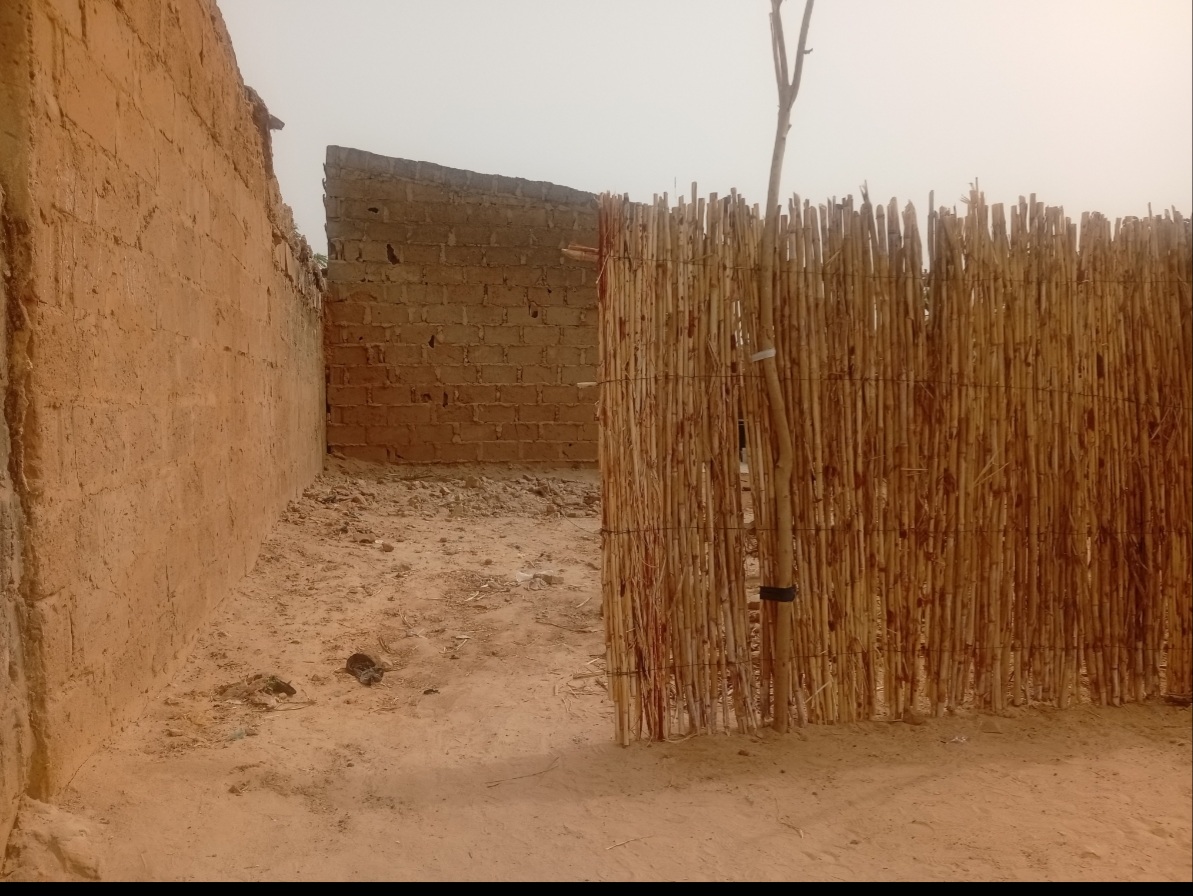

The Yobe State Emergency Management Agency (YOSEMA) provided the expected response: temporary food items and basic relief. But emergency aid is a short-term bandage for a long-term hemorrhage.
About six months later, the aid has long since evaporated, leaving a vacuum where a recovery plan should be. Mairama’s return to this high-risk zone is not an act of defiance or ignorance; it is a symptom of a systemic “Infinite Loop.”
For a widow with no formal income and eight mouths to feed, “managed retreat” from a flood zone is an economic impossibility. ”This is our home,” she says, standing within her corn-stalk fence. “Wherever we go, we will eventually need to come back here.”
A Social Topography
As the 2026 rainy season approaches, the geography of Potiskum remains unchanged. Mairama remains at the edge of the valley, waiting for the clouds to gather again. Her story is a silent indictment of an urban planning system that allows the most vulnerable to settle in the paths of future disasters.
In Potiskum, the “wrong water pathways” are as much a social issue as they are a topographical one. Until policy shifts from “temporary relief” to “permanent resettlement,” Mairama Inuwa is not just living in a flood path—she is living in a policy vacuum.
Muhammad Saeed Lawan is a young journalist and ✍ from Yobe state.


