





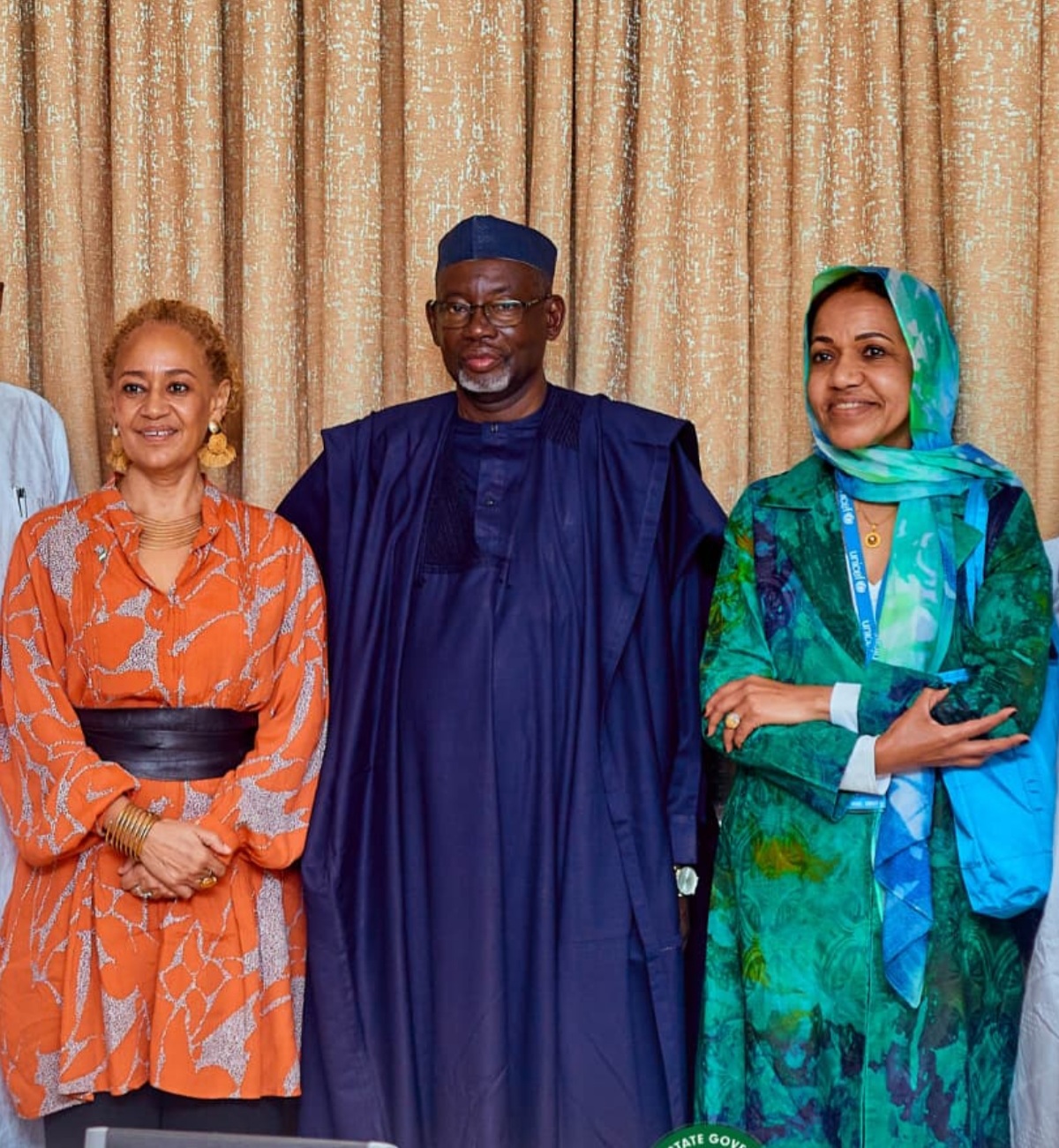
Dutse, Sept. 9, 2025
The UK Government has announced a £19M funding to develop Climate Resilient health and education facilities in Nigeria on Wednesday.
A press statement signed by Atinuke Akande-Alegbe, Senior Communications and Public Diplomacy Officer, disclosed that the announcement was made at a joint inauguration of the model by the UK Government, UNICEF, Federal Ministry of Health and the Governments of Kano and Jigawa States.
It said that it has 84 climate-resilient schools and health care facilities under the Climate Resilient Infrastructure for Basic Services (CRIBS) initiative.
CRIBS is a pioneering an innovative programme that is piloting a new approach to protect essential health and education services from the growing threats of climate change.
“Nigeria ranks second globally in climate-related risks to children, with millions affected annually by floods, droughts, and extreme heat.
“In response, the CRIBS approach has been developed to assess and strengthen 84 facilities, 39 primary healthcare centres and 45 schools in Kano and Jigawa, through targeted climate adaptation measures.
“The inauguration of these model facilities, marks a significant milestone in demonstrating scalable, community-owned solutions to climate vulnerability, that can be adopted by the Federal and state governments,” it said.
The UK Government it said, is proud to support Nigeria through the £19m commitment to the CRIBS programme, developed through a partnership of organisations and experts?
The partnership includes the Federal Government of Nigeria, the UK Government, UNICEF, World Bank, World Health Organization, Sextant Foundation, JigSaw, Fab Inc, Crown Agent and UK Lafiya Programme.
CRIBS according to the statement, demonstrates how climate-resilient infrastructure, can improve access to basic services for vulnerable populations.
“We hope this model inspires broader replication across Nigeria,” Cynthia Rowe, Development Director Nigeria, British High Commission Abuja said.
“This initiative is a testament to what strong partnerships can achieve,” added Wafaa Saeed, UNICEF Representative in Nigeria.
“By investing in climate-smart infrastructure, we are not only protecting services but also empowering communities to safeguard their children’s future.
CRIBS is a model for how we can build resilience where it matters most, at the frontline of service delivery,” Wafaa said.
The inauguration aligns with national and state priorities in climate action, health, and education, thus reflecting the UK’s commitment to supporting Nigeria’s efforts to mitigate climate risks and improve service delivery.
It was gathered that CRIBS was launched in April 2024, funded by FCDO, and developed through a partnership approach from a range of Nigeria Government and international organisations and experts.
It is a comprehensive and systematic approach to developing affordable, high impact and scalable models of climate-resilient infrastructure for basic services, with a focus on vulnerable communities.
Based on the successful implementation of the approach in Kano and Jigawa States by UNICEF, the initiative has been expanded to include Bauchi, Enugu, Gombe, Kaduna and Katsina states.
Aisha Ahmed ✍ from Dutse


