





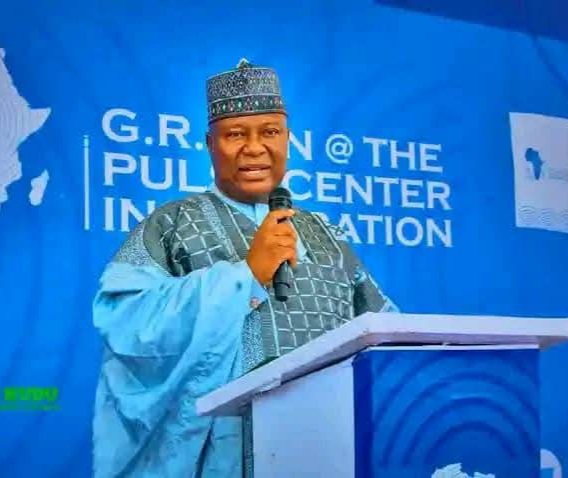
Birnin Kudu, Jigawa State, Sept. 23, 2025
In a bold move to address unemployment, drug abuse, and the menace of political thuggery amongst young people, the Chairman of Birnin Kudu Local Government Area, Bld Muhammed Uba, has launched an innovative initiative that channels youth energy into agriculture, particularly rice farming.
The effort, described by community stakeholders as a “game-changer,” is already yielding results, both in terms of reducing restiveness and providing a sustainable means of livelihood for hundreds of young people across the council.
For decades, political thuggery has been a recurring challenge in Nigeria’s democracy, particularly at the grassroots level. During electioneering periods, political actors often exploit idle and unemployed youths, offering them money, drugs, or other incentives to intimidate opponents, disrupt campaigns, or create an atmosphere of fear.
Birnin Kudu, one of the largest and most politically active local governments in Jigawa State, has had its fair share of this challenge. The practice has not only undermined political stability but also destroyed the future of many promising young people, many of whom have fallen into cycles of drug abuse, crime, and poverty.
Recognizing the link between unemployment and political thuggery, the local government chairman decided to take decisive action through deployment of agricuagriculture as a tool for social change.
Rice farming is one of Jigawa State’s economic strengths being an agrarian in nature, with the state having ambition of being among Nigeria’s producers of the staple food, under the Namadi administrati


Leveraging this comparative advantage, the Birnin Kudu council launched a youth engagement programme that brings together hundreds of young men, into organized, supervised rice farming cooperatives.
Under the programme, the local government provides access to land, farm inputs such as seedlings, fertilizer, and pesticides, as well as training on modern farming practices.
In addition, extension workers are deployed to monitor progress, while local security structures ensure peaceful operations in the farmlands.
“We realized that the energy of our youths was being misused during political periods,” the chairman explained during an interaction with journalists.
“Instead of letting them be used as tools for violence, we are now guiding them to become productive contributors to our economy. Agriculture is our pride, and rice farming provides both food security and jobs.”
The testimonies of beneficiaries tell the true story of transformation. Umar Muhammed is one of them and he has this to say.
“I used to follow politicians during campaigns just to get little money to buy some items or feed myself,” admitted 24-year-old, single man.
“But today, I’m a farmer. Last season, we had some challenges yet we harvested some bags of rice from the plot given to us.
“We sold some and even saved money to plan for the next season. I will never go back to my previous idle life again,” he said.
Another beneficiary, Auwal Abdullahi, highlighted how the initiative has restored dignity among his peers.
“Before, our parents used to complain over our filthy political engagement because they thought we had no future.
“Today, when they see us in the farms, sweating and working hard, they are proud. Farming has given us respect in society and we owe this to our hope, Muhammed Uba, our amiable chairman.”
Such success stories reflect the power of meaningful engagement in steering young people away from destructive lifestyles.
As “Builder” provides job employment and secures food future to the youths of Birnin Kudu, he is at the same time taming drug abuse in the area.
Drug abuse remains a silent epidemic among unemployed youths across northern Nigeria, often linked with political violence.
Idle young men are drawn into abuse of substances such as codeine, tramadol, cannabis, and other stimulants, which are sometimes distributed during political rallies to embolden them for violent activities.
The chairman noted that creating alternative opportunities is critical to breaking this cycle. “Drug abuse thrives where there is hopelessness,” he said.
“But when young people have a clear source of livelihood, when they see that hard work pays, they no longer look to drugs or politicians for survival. Farming keeps them busy and healthy.”
As a community champion, “Builder” attributed the success to stakeholder collaboration as the effort was iniinitiated to compliment the commitment of the state Governor Umar Namadi, in involving the youths in agriculture.
In addition, the chairman appealed to political stakeholders to support the initiative by refraining from exploiting youths for thuggery.
The chairman stressed that “politics should be about ideas, not violence,” and warned that the council will no longer tolerate the use of young people for political disruption.
Aisha Ahmed ✍ from Dutse

