


By Saeed Muhammad Lawan
Potiskum-October 8, 2025
The marks of that August morning still stain the walls of houses across Potiskum. Faded brown streaks, rising to chest level, trace the line where the floodwaters once stood — a dirty scar of memory that the sun cannot erase.
It has been nearly two months since the heavy downpour, yet the fear remains. The ground is dry and cracked now, the heat unrelenting, but no one has forgotten the night the water came.
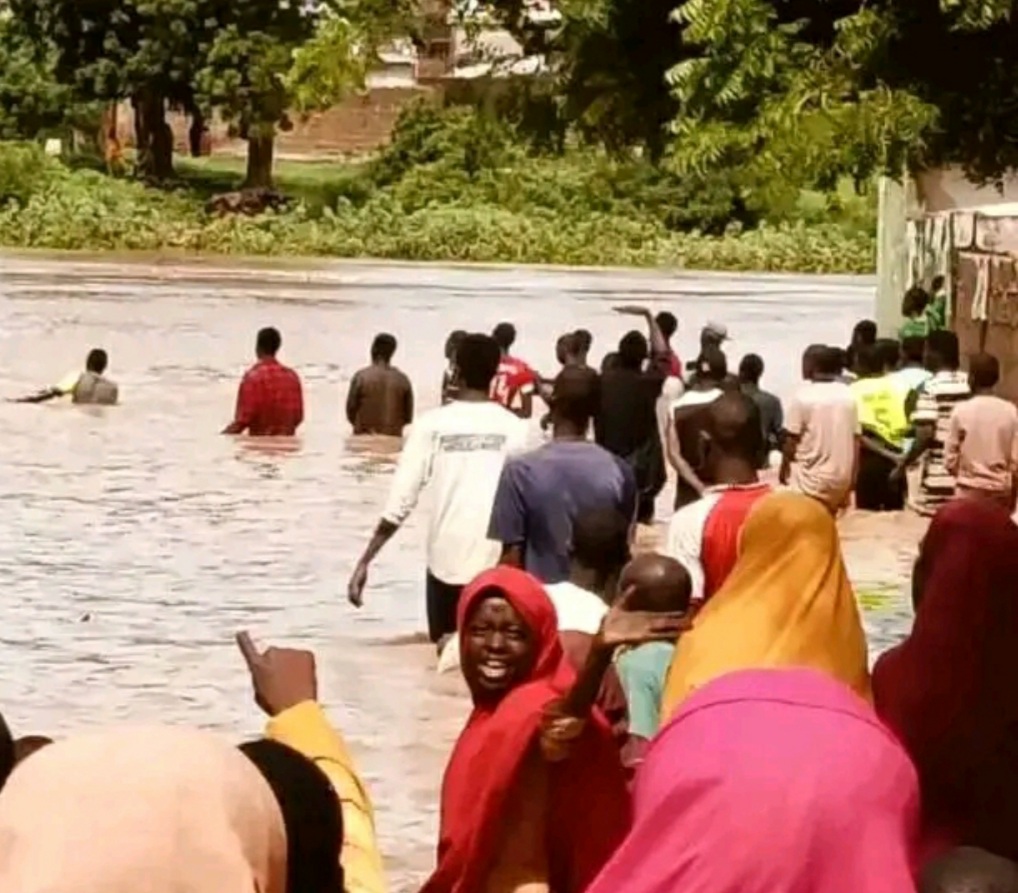
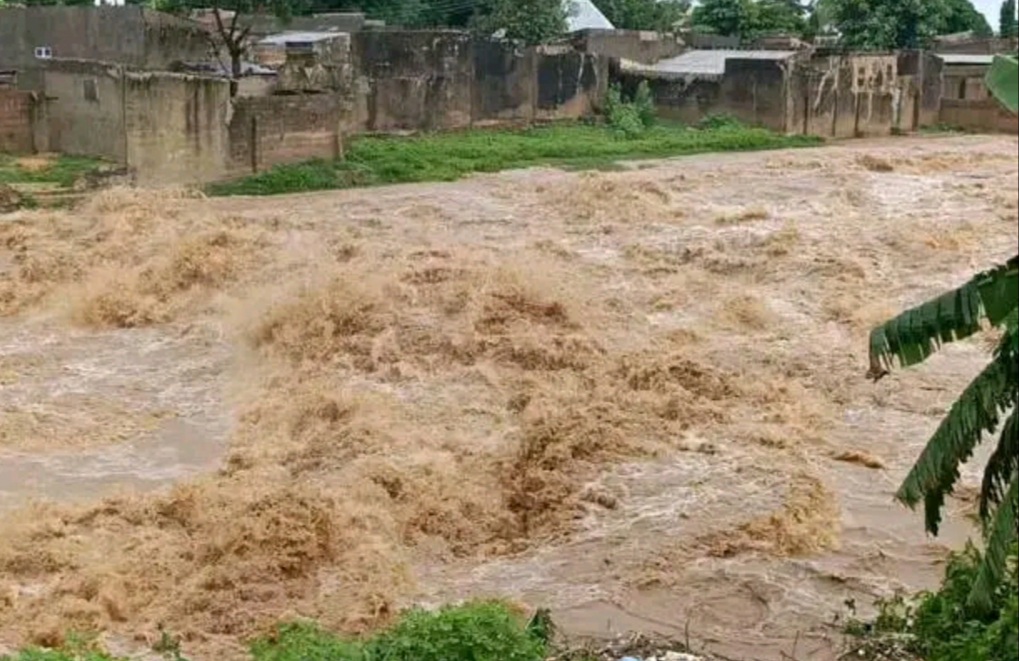
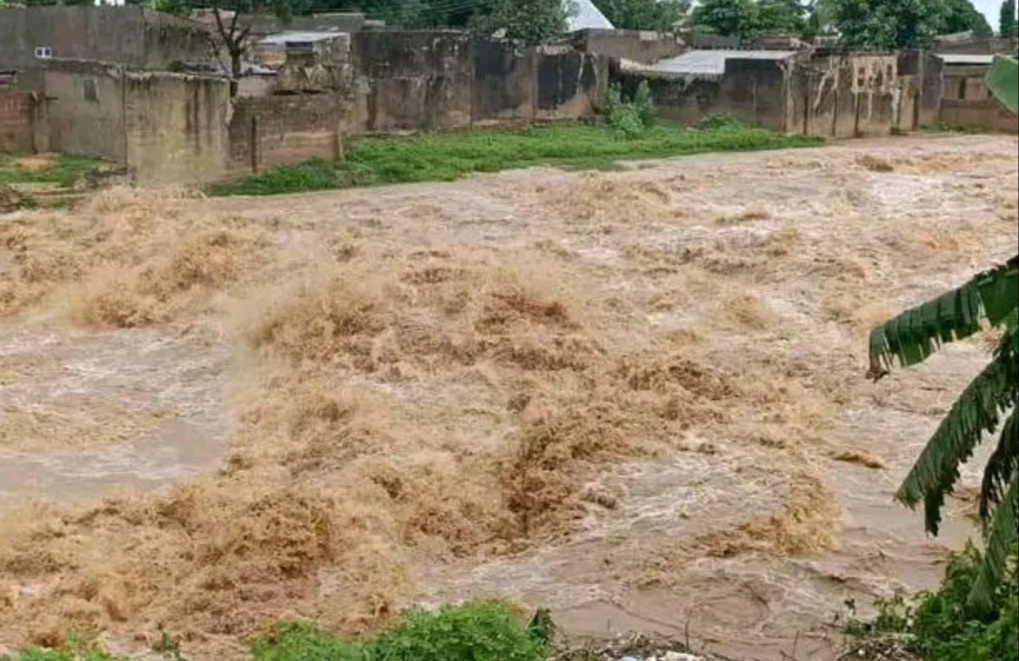
All through that Friday night, the rain refused to stop. By dawn, the shallow valley that snakes through Potiskum — the town’s natural waterway — had become a raging torrent. Around 6 a.m., it overflowed. What began as a steady stream became a roaring surge that swept through the town, submerging homes and dreams in its path.
The neighborhoods built along the valley — Old Prison, Filin Nashe, Unguwar Makafi, and Bayan Makabarta — were the first to disappear beneath the flood. Then the destruction spread further, swallowing streets in Karofi, Bayan Garejin Dan Juma, and a dozen other communities long considered safe.
Fatima Audu’s house in Filin Nashe was among those washed away. Today, she shares a small living room with her brother’s family, sleeping on a mat with her three children.
“We ran with nothing,” she says quietly. “My sewing machine, our clothes — everything is gone. I knew it was risky living near the valley, but where else could we go?”
For many residents, this was unlike any flood they had seen before. The water didn’t stop at its usual boundaries. It climbed higher, invading homes that had stood untouched for decades.
Seventy-year-old Malam Haruna Bello still struggles to comprehend it. Sitting outside his damaged home in Karofi, he points to the collapsed wall beside him.
“For thirty years, we have lived here,” he says. “The water would rise and roar, but it never reached us. We thought we were safe. This time, it came for us too.”
Weeks after the flood, people are rebuilding — patching walls, replacing lost belongings, and pretending life is back to normal. But beneath the bustle lies a quiet anxiety. The line between the danger zone and the safe zone has vanished.
From Old Prison to Karofi, one question lingers: If the water could reach us once, what will stop it next time?
Yobe State — like much of northern Nigeria — is now on the frontline of climate change. Rising temperatures, erratic rainfall, prolonged droughts, and now violent floods are becoming part of the region’s rhythm. According to the Agro-Climatic Resilience in Semi-Arid Landscapes (ACReSAL) project, communities face a dangerous dual threat: intensifying aridity and unpredictable, destructive floods.
What happened in Potiskum is more than a local tragedy. It is a warning.
