April 12, 2025
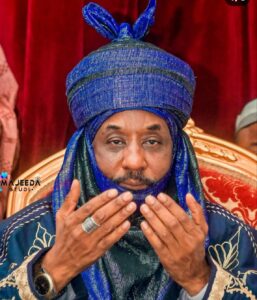
Emir of Kano, Sarkin Kano Muhammadu Sanusi II stood at the minbar. His turban glowed in the sunlight. His voice carried steady power through the Jumaat prayers. I stood nearby, notebook in hand. I’m a son of Zaria, drawn to a man I’ve backed for years.
Through my LEADERSHIP Newspaper columns, I wrote about him when he fought President Goodluck Jonathan as CBN governor. In January 2014, I wrote “Why Mr. President Must Not Allow Sanusi Go!” Then in June 2014, I wrote “Sarkin Kano HRH Muhammadu Sanusi II” when he became Emir of Kano.
I reflected on his dethronement in May 2019 with “Between Muhammadu Sanusi II and Governor Ganduje or the Nigerian National Structures and the Northern Emirates?” I cheered his return in March 2024 with “Some Thoughts: My Three Northern Emirs, the Recent Kano Saga!” I’ve always celebrated this scholar-king who vaulted from banking hall to royalty. As the crowd prayed, their respect filled the air.
But a question nagged me: should one person, even a giant like Sanusi, carry both leadership (Sarauta) and priesthood (Limanci)? Through Zaria’s eyes, this isn’t just Kano’s tale—it’s a Northern story, rich with layers, and I’ll unpack it here.
The Caliphate’s Dual Threads
Go back to the 1800s. The Sokoto Caliphate ruled these lands. Emirs weren’t just leaders—they lived the jihad’s dream, weaving faith into power. In Kano, Sanusi’s grandfather, Emir Muhammadu Sanusi I, preached in the Great Mosque.
His words rang out strong. When Sanusi II became Emir in 2014, he grabbed that tradition. He led prayers at the Central Mosque and, during the 2024 emirate drama, at the palace. As head of the Tijanniyah Sufi order, with millions following him, it suits him perfectly.
Back in the jihad days, emirs like Suleiman mixed ruling and religion to unite a broken land. Their prayers linked earth to sky.But history bends. Shehu Usman Danfodio built the Caliphate. He didn’t cling to power after victory. He handed it to Muhammad Bello and turned to books. His brother Abdullahi followed that path.
They saw a truth: ruling tackles today’s mess, priesthood reaches for forever. By colonial times, many emirates had Chief Imams. In Zaria, my Wazirayni—Malam Umar and Malam Lawal—started as judges and teachers. They mixed those roles until they rose to Waziri. Then they passed preaching to others. I wrote about this in “Northern Nigerian Muslim Clerics in Politics” in 2021.
Kano stuck to blending the roles longer. Still, the Caliphate’s wiser heads suggested balance. Two big callings like these? Too much for one person. Across the Sahel, Songhai’s Askia Muhammad used separate scholars. Kanem-Bornu’s kings let Qadis lead the faith. It’s a hint worth chewing on.
Sanusi’s High-Wire Act
Sanusi stands out. His story shines. He led Nigeria’s Central Bank with an iron hand. Now he’s an Emir with a scholar’s heart. His words shake the country. In my 2024 piece, “Some Thoughts: My Three Northern Emirs,” I praised his knack for sparking talk. In 2014’s “Sarkin Kano HRH Muhammadu Sanusi II,” I loved his successful fusion of Northern heritage with the concept of Ni
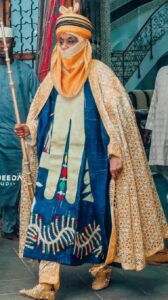
HRH Emir Muhammadu Sanusi II of Kano
His 2024 comeback, after being dethroned, promises a fresh North—the revised family laws, fiery debates. Picture this: his sermon lifts the crowd. Then he steps from the minbar into palace chaos—tax fights, court plots, maybe a hint of the North’s wild side. The Prince tackles life’s rough edges.
The Preacher looks to the heavens, free of that mess. Mix them, and it gets blurry. Does the sermon speak God’s truth or palace intrigues? This scene’s made up, but it shows a real snag: when an Emir does both, the holy and the worldly tangle. Their edges wear thin under the load.
This clash isn’t new—it’s baked into the mix.
I saw it with Shaykh Pantami in my 2021 piece. His bold sermons faded when power called. Gifts from governors drowned out his truth. Sanusi’s tougher, his honor solid, but the setup wobbles. People need a preacher clear of palace dirt. He needs room to rule without that extra robe. I’ve walked Northern roads from Zaria—tasted the dust, felt the dreams, seen the cracks.
Power and faith twist together, even in strong hands. Sanusi’s learning and Sufi role fit him well. That’s the catch: his power hides the stress. The stress is built in, tugging whenever leadership and priesthood share one heart.
The Burden Beneath
Can Sanusi handle both? Yes—he’s a giant. But why make him? In my 2020 piece, “IRAN: Muslim Theocracy, Democracy or Theocratic Democracy?,” I showed how Khomeini tried both roles. It filled prisons and dimmed his shine, as his friend Ayatullahi Hosseini Montazeri criticized and Ahmad Alkatib detailed in “The Development of Shiite Political Thought”.
The Ummayad Caliphate did better when Hasan al-Basri’s honesty checked Umar II. Their split kept the fire alive. Harun al-Rashid shook at Fudayl ibn ‘Iyad’s sharp words, their jobs separate. Blend them, and the light fades.
The Preacher goes quiet when he’s the Prince. In 2025’s North—Kano or farther—trouble spreads: restless kids, messy politics. An Emir must lead decisively, free of distraction, yet add prayers and wise counsel, and the spirit unravels.
The bigger point is this: an Imam should mirror society, showing its flaws—even the palace’s. Make him Emir, and that mirror fogs up. His voice bends to power. That made-up scene—sermon to palace mess—nails it.
It’s not real, but it’s true: when roles mix, the sermon wavers. Palace needs pull it off track. I say this happens every time an Emir tries both. It’s not Sanusi’s fault—the system sets it up. History proves it. Umar II leaned on Hasan al-Basri’s straight talk.
Harun al-Rashid cried at Fudayl’s words. Neither led every prayer. Keeping them apart kept them steady—the Prince watched, the Preacher bold. From Zaria, I’ve seen our North struggle—poverty stings, identity pulls, unrest brews. We need both roles clear. Sanusi’s reign isn’t all that’s at stake—it’s how we build things. Prayers lift morals; ruling wrestles the real world. The holy and the everyday tangle when they’re one.
A Path Forward
Here’s my idea—a tweak, not a break. Let future emirs pick a Chief Imam to lead prayers. The Emir keeps control—choosing imams, backing their calls—but skips the robes. It’s not wild; old emirs passed off duties, and Sokoto liked the split. Sanusi could start this, his reign the turning point.
He’d shape the North—schools popping up, markets buzzing, peace settling in—while an Imam frees the mosque’s song from palace ties. It’s a duet of clear roles, not one soul stretched thin.
This lifts Sanusi up. His mark could be a North where leadership and priesthood walk side by side, each stronger. People get a Preacher free of court shadows. The Prince gets space to tackle our mess—jobs, youth, a region fighting to stand. Zaria’s Wazirayni dropped teaching when they rose higher.
Gwandu and Katsina could do the same. Our ancestors split these roles for a reason: two loads, too heavy for one back. That imagined sermon-to-palace blur isn’t fact, but it reflects truth—when faith steps into worldly chaos, it clouds up. Sanusi, with his sharp mind and king’s grit, could make this split sing—a gift to the North I call home, Zaria’s dust in my blood.
The Closing Chord
Sanusi II is huge—his mind cuts like a knife, his bravery lights the way, his blend of Muslim roots and Nigerian toughness amazes me. I’ve shouted it from my now rested LEADERSHIP Column in 2014 to today’s online posts, and I won’t stop. But love opens your eyes.
The Prince-as-Preacher way creaks under today’s weight—not because of Sanusi, but because that made-up scene shows mixing roles muddies them. I say it’s always there when an Emir holds both leadership and priesthood. From Zaria, I’ve roamed these plains—tasted the dust, felt the heartbeat, seen the breaks—and I say it’s time.
Two seats, two tasks—our elders got it, and we should too. Sanusi can flip this page, building a North where leadership and faith don’t bump but rise. He’s the king for it, giving us a story of not just hanging on, but climbing high—a tune for the ages, ringing from Zaria to our land’s far edges.
By Ibraheem A. Waziri
A prominent columnist with The Leadership Newspaper.